

Linz, Austria

1-3 December 2025
© Leonhard Niederwimmer from pixabay
Keynotes
Opening Keynote
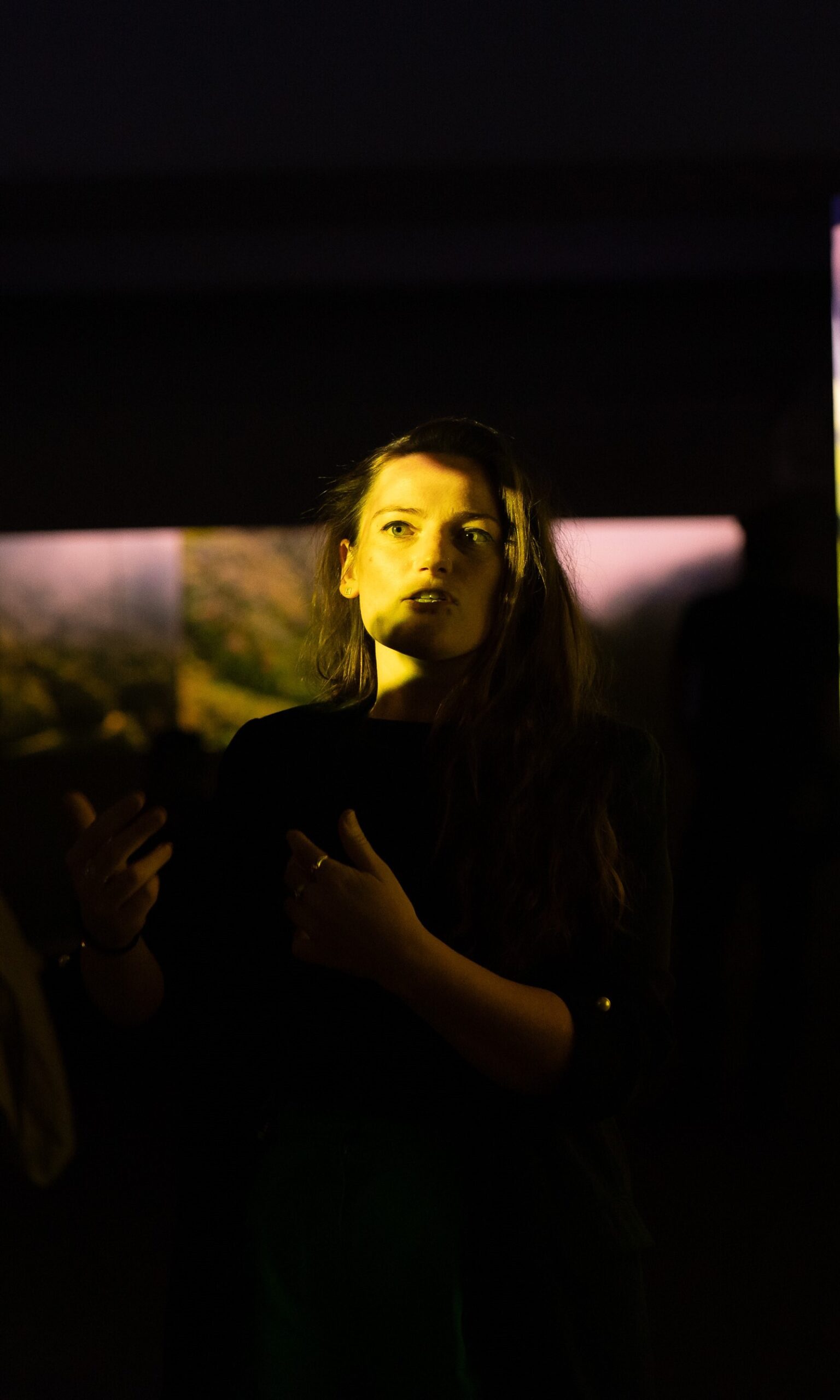
Christl Baur
Head of Ars Electronica Festival
Christl Baur is the Head of the Ars Electronica Festival, where she leads as an interdisciplinary researcher specializing in the convergence of art and science. She has curated and co-produced a wide range of exhibitions and performances, notably including the exhibition “40 Years of Humanizing Technology – Art, Technology, and Society” in collaboration with CAFA and the Design Society in Shenzhen. China. Baur’s expertise extends to various fields, including video art, new media technologies, computer art, biotechnology, and interactive art.
Baur’s contributions are not limited to practical endeavors but also extend to academic publications. She has authored thought-provoking texts such as “Art with a Lifespan: Digital Technologies and the Preservation of BioArt” and “Intersections of Media Art & the Art Market,” which have been featured in the Journal of Visual Art Practice. Furthermore, Baur’s expertise has made her a highly sought-after speaker, gracing prestigious conferences such as ISEA, TTT2020 Vienna, Montreal Digital Week, and Vienna Art Week with her insights. In addition, her contributions to the field of media art have been acknowledged through her participation in renowned international juries, including the NTU Global Digital Art Prize in Singapore, the Global Creative Technology Design Award, and the Best Media Art Graduation Diploma Competition in Poland.
Making ⇄ Sensing ⇄ Meaning
In an era where algorithms see, sense, and generate alongside us, the act of meaning-making has become a shared and constantly shifting process between humans and machines. Making ⇄ Sensing ⇄ Meaning explores this evolving interplay — how artistic, technological, and societal practices are increasingly shaped by feedback loops of creation, perception, and interpretation across biological, digital, and cultural systems.
Drawing on more than four decades of Ars Electronica’s exploration at the intersection of art, technology, and society, the talk offers an insight into the Ars Electronica ecosystem and how it serves as a living laboratory for experimentation, reflection, and collaboration between artists, researchers, and institutions worldwide. Through examples from recent Ars Electronica Festival projects, the talk examines how artistic practices – from immersive installations and worldbuilding to AI-driven co-creations and participatory citizen science – expand our capacity to sense the world differently and to reimagine our role within complex systems. These works raise fundamental questions: What happens when machines begin to participate in meaning-making processes, cultural memory, and collective imagination? How can we sustain human empathy, creativity, and agency within increasingly automated environments? Ultimately, Making ⇄ Sensing ⇄ Meaning is an invitation to formulate new creative questions — questions that challenge established systems, open new ways of perceiving and connecting, and allow us to imagine futures that do not yet exist.
Closing Keynote
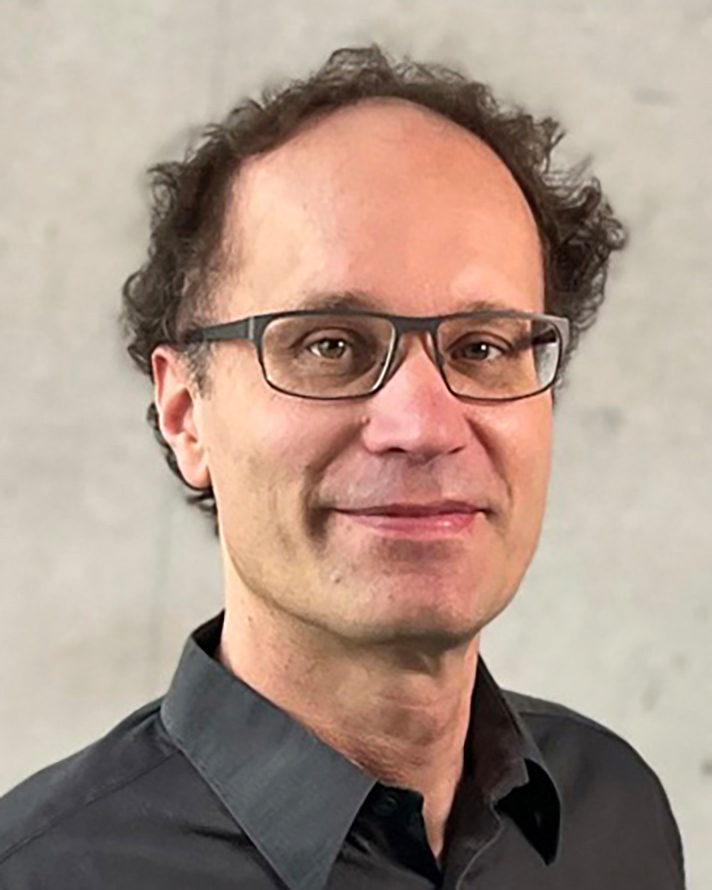
Daniel Weiskopf
Professor for Visualization, Visualization Research Center (VISUS), University of Stuttgart
Daniel Weiskopf is a professor and director of the Visualization Research Center (VISUS) at the University of Stuttgart, Germany. He received his Dr. rer. nat. (PhD) degree in physics from the University of Tübingen, Germany (2001), and the Habilitation degree in computer science at the University of Stuttgart (2005). His research interests include visualization, visual analytics, eye tracking, human-computer interaction, XR, and computer graphics. He is spokesperson of the Collaborative Research Center SFB/Transregio 161 “Quantitative Methods for Visual Computing” (www.sfbtrr161.de), which covers basic research on visualization, and a member of the board of directors and principal investigator of the Cluster of Excellence “Integrative Computational Design and Construction for Architecture” (IntCDC), which targets the interdisciplinary and integrative development of digital technologies for AEC.
Visualization in Architecture, Engineering, and Construction
In this talk, I discuss the challenges and opportunities of visualization for architecture, engineering, and construction (AEC). With the worldwide population growth, the AEC industry has to provide additional urban housing for more than 2.5 billion people in the next 30 years. Because of the importance of a high-quality and sustainable future built world and the massive ecological impact of the building industry, there is an urgent need for improvements in AEC, in particular, by increased digitization and automation. I elaborate on how interactive visualization, visual analytics, and XR can contribute to the next level of digitization in AEC. By adopting a comprehensive perspective that includes design, fabrication, construction, and monitoring, it becomes apparent that there is a need for diverse and application-oriented sets of visual techniques, ranging from abstract data visualization techniques, such as those for networks or optimization landscapes, to situated visual monitoring with AR, all the way to supporting collaborative design and planning processes. I present a few examples of such visualization approaches. Overall, I argue that AEC is a great application field for visualization with manifold, interesting, and highly relevant research challenges.